
Art Education Career Opportunities
- Art Teacher (K-12)
- Arts Organization Administrator
- Museum Educator
- Private Art Instructor
- Art Therapist
- Curriculum Designer

Students in RIC's Art Education Program get the best of both worlds: (1) a strong foundation in art history along with hands-on studio art practice, and (2) rigorous teacher training through our nationally recognized Feinstein School of Education and Human Development.
One Day Only! Join students from across Rhode Island on November 16 and apply free to Rhode Island College! Take advantage of Apply to RIC for Free Day and we'll waive your $50 application fee.
On November 7, from 12:30–4 pm, come see all that RIC has to offer. Discover how we prepare students for success through in-demand academic programs, hands-on learning and state-of-the-art facilities.
We're thrilled that you're interested in Rhode Island College and we want to make sure that nothing stands in your way of pursuing a RIC degree. Just let us know how we can help you with your next steps.

Understand the courses you'll take, the curriculum requirements to meet, and the concepts you'll gain mastery of. Get the detailed information you're looking for.
Are you an art transfer student? We have a portfolio review process that will assist you in transferring your credits.





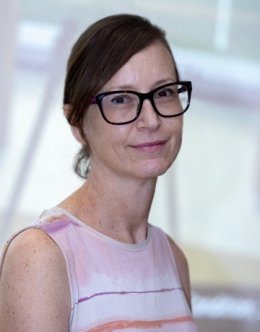


“Rhode Island College is the only publicly funded higher education institution that provides an undergraduate degree in visual art education. We prepare teachers to activate their student’s curiosity, divergent thinking and personal expression through visual art.”

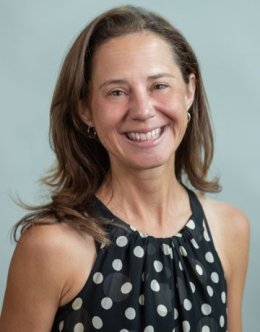
“Through art education, I’m able to teach students to socialize, to connect, to learn about each other and about themselves.” – RIC senior Caterina Brunell
Please Note: There is no longer a secondary admissions process for this program. Applicants only need to apply through our general Admissions & Financial Aid processes.
Performance of students in initial teacher preparation programs is measured through outcomes that are aligned with the four themes of the FSEHD Conceptual Framework and the Rhode Island Professional Teacher Standards:
Reflective practitioners possess a broad base of knowledge in the liberal arts, including mastery of oral and written English communication, mathematical and reasoning skills, and technological competence as well as a global perspective that emphasizes people's interdependence with one another and with nature.
Reflective practitioners have a solid grounding in educational psychology, the branch of psychology that specializes in understanding teaching and learning in educational settings. They know the four pillars of educational psychology: human development, theories of learning and cognition, classroom management, and assessment.
Reflective practitioners possess a critical understanding of the contexts of schooling: social, political, economic, historical, philosophical, legal, professional, global, and cultural.
Reflective practitioners possess a deep, thorough, and, above all, working knowledge of their area(s) of specialization, enabling them to make informed decisions to approach curriculum implementation.
Reflective practitioners employ a variety of models of teaching and learning. Best practice entails a balance between pedagogical approaches.
Reflective practitioners integrate technology into curricula, instruction, and assessment of students to create high-quality learning experiences and instructional opportunities.
Assessment is primarily a means for determining the relative success of teaching and counseling interventions for the purpose of improving them in the future. In other words, assessment is used as a tool for reflection and subsequent planning.
Reflective educators are knowledgeable of both the differences that distinguish individuals and groups and the commonalities that bind them together. They understand and respond to the diverse needs and backgrounds of students, clients, and families and develop strategies for combating prejudice and advancing educational equity, inclusion, and intercultural understanding.
Reflective practitioners are aware of the impact of disability on the teaching-learning process and are responsive to the individual strengths and needs of children and youth with a range of disabilities. They understand the effect that disability has on family functioning, and they can work effectively with parents in program planning. In order to function effectively in an inclusive environment, reflective practitioners must also collaborate with professionals from all disciplines when making educational decisions. They examine their own cultural and family background as it pertains to disability, reflecting on the impact of their beliefs and behavior on the classroom setting, counseling situation, or planning session, making adjustments as necessary. They are prepared not only to be responsive to students' adapted curriculum, instruction, and learning needs but also to make curriculum adaptations and instructional modifications on-the-spot to accommodate students' needs.
Ethics are principles of conduct used to guide an individual's behavior. Ethical principles guide practitioners as they determine aims and objectives; select content and materials; plan and implement methods and strategies; conduct non-discriminatory evaluations of students, clients, and staff; reflect on their choices and actions; and take responsibility for the consequences. Reflective practitioners accept the professional, social, ethical, and moral responsibilities and reap the personal rewards of being a teacher in a democratic, pluralistic society.
Reflective practitioners recognize that schools, families and communities must work together, and educators must collaborate within schools, to support student and client learning and growth, and to promote democratic values in their own communities and beyond.
Reflective practitioners consciously plan, implement, and reflect upon their own professional growth, as well as that of the profession. Committed professionals actively participate in a wide variety of educational opportunities.
The Department of Art prepares students for professional careers, liberal arts careers and graduate study. We also prepare the pre-K-12 art teachers of tomorrow.