

Nursing BSN for Second Degree Candidates Specifics

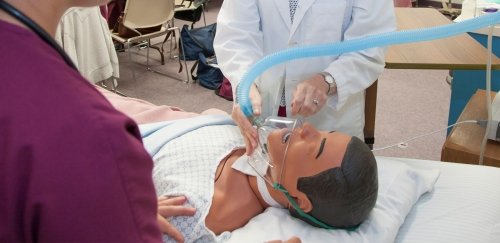
Mannequin under anesthesia

What to Expect

The BSN program for second degree candidates builds on your first baccalaureate degree and includes required nursing courses and related/complimenting courses outside of nursing. You begin by applying to RIC, with an individualized plan of study being prepared upon your acceptance. Then (as current RIC student) you will apply to the School of Nursing for admission to the BSN program.

CCNE accreditation logo

Accreditation

The baccalaureate degree program in nursing, master’s degree program in nursing, and Doctor of Nursing Practice program at Rhode Island College are accredited by the Commission on Collegiate Nursing Education.

Program Details

Admission and Course Requirements

Apply to RIC

Second degree candidates first apply to the college using RIC's Transfer Application. After your RIC application materials are received and processed, a Plan of Study will be formulated with the BSN program director.

Please Note: Acceptance into RIC as a second-degree student does not guarantee admission to the School of Nursing. 

Apply to the School of Nursing While Enrolled at RIC

The Nursing BSN College Catalog Entry provides details on the specific application requirements for second degree candidates into the School of Nursing, as well as the the program's course requirements and additional requirements.

Minimum Requirements to Apply to the BSN Program

  • Students must be admitted to Rhode Island College and be an Intended Nursing Major.
  • Completion of Rhode Island College Mathematics Competency & Writing Requirement.*
  • Completion of (within the past 10 years) or enrollment in Biology 201/202, 203/204, Chemistry 121 and Psychology 230 with a minimum grade of C in each course and a minimum overall grade point average of 2.67 (B-) in these courses.
  • A minimum RIC cumulative grade point average of 3.0 for students who have taken any RIC courses. For second degree and transfer students, a weighted cumulative GPA of all courses taken at any college must also be at least 3.0. The GPA minimum requirement of a 3.0 must be met at the time of application and at the end of the semester. The minimum cognate GPA requirement will be reviewed at the end of the spring semester once grades are posted. 

*Refer to the Bulletin of Rhode Island College Catalog for descriptions of the Math Competency and Writing Requirements. 

Please Note: All students consult with their advisor each semester before registering for courses.

Application Timing

Fall Application

Students who anticipate enrolling in beginning nursing courses – NURS 220 and NURS 222 – for the Fall Semester need to submit a Nursing Program Application Form by the deadline that is on the application. 
Spring Application

Students who anticipate enrolling in beginning nursing courses – NURS 220 and NURS 222 – for the Spring Semester need to submit a Nursing Program Application Form by the deadline that is on the application.

Nursing Courses

Course Descriptions

Health Requirements

Every year students must provide health services with evidence of a negative PPD test or compliance with treatment. Before beginning some clinical nursing courses, students may be expected to meet additional health requirements. All nursing students must have the following information on file in College Health Services:

  • an admission physical exam
  • 1 dose of tetanus-diphtheria-pertussis (Tdap)
  • 2 doses of live measles vaccine (preferably MMR) or a blood titer confirming immunity
  • 2 doses of mumps vaccine (preferably MMR) or a blood titer confirming immunity
  • 1 dose of rubella vaccine or a blood titer confirming immunity
  • 3 doses of hepatitis B vaccine (A hepatitis B surface antibody titer to confirm sero-conversion is recommended on-to-two months after the final dose.)
  • provider documented proof, including date or age, of chicken pox disease or a varicella titer confirming immunity or two doses of varicella vaccine
  • an initial 2-step PPD** tuberculin skin test and yearly PPD updates (or chest x-ray if PPD positive and yearly TB assessment, which is completed at RIC's Health Services)
  • flu vaccine every fall semester
  • completed COVID vaccination

*Health-care workers born on or before Dec. 31, 1956, are only required to have documentation of one dose each of measles, mumps and rubella or titers confirming immunity.

**2-Step PPD – two separate PPDs planted at least a week apart but not more than a year apart prior to entering into nursing clinical.

Download a Printable Copy of This Checklist

Students will not be admitted to the first class meeting of a nursing practicum course without having complied with the health requirements. Proof of immunization may be obtained from your physician, high school, previous college or university, military record and/or from blood titers.

Nursing majors should follow the guidelines on the college immunization form or call RIC's Health Services at 401-456-8055 for further information. Once all required information is complete, students may pick up their laminated identification cards at College Health Services.​

Program/Learning Goals

Upon completion of this program, students will be able to:

  • Engage in continuous education in the arts and sciences to inform decision making as a professional nurse and member of a global society.
  • Apply concepts of leadership, quality and safety to improve health-care outcomes in a cost-effective, safe and caring organizational environment.
  • Demonstrate critical thinking in evaluating and integrating evidence and interprofessional perspectives to improve health-care outcomes.
  • Use patient care technologies, information systems and communication systems to facilitate safe, efficient and effective nursing practice.
  • Promote professional nursing practice that addresses policy development, legislative process, health-care financing and reimbursement and political activism within an ethical framework.
  • Perform in the autonomous and collaborative role of the professional nurse to enhance the interprofessional team.
  • Participate in activities that promote health, prevent illness and injury and provide population-focused interventions that provide effective, efficient and equitable health care.
  • Demonstrate professional behaviors that encompass accountability, responsibility, adherence to standards of moral, ethical and legal conduct and the pursuit of lifelong learning.
  • Possess the knowledge, skills and attitudes to provide nursing care in a variety of settings to a diverse group of patients of all ages, cultures, genders and religious backgrounds.
Rhode Island College entrance

Program Director