
Numerous Benefits
- Expand opportunities for students
- Offer RIC credits on your campus
- Help students cut college costs
- Partner with RIC faculty
- Prepare students for college-level academics

The Early Enrollment Program helps participating high schools provide students with a challenging college-level academic experience without leaving their school.
Participating high schools identify courses and qualified teachers for EEP approval. Once approved by RIC faculty, students enrolled in those courses have the opportunity to earn both high school and Rhode Island College credit. EEP works collaboratively with each participating school to maintain rigorous academic standards while supporting teachers, students, and administrators throughout the process.
EEP courses are equivalent to comparable Rhode Island College courses and follow approved college syllabi and academic standards. RIC faculty work closely with participating high school teachers by:

Qualified high school teachers can bring Rhode Island College credit directly into their own classroom through the EEP. Instructors teach an approved course using a RIC-vetted syllabus, maintain their credentials and communication with the on-site coordinator, and receive a yearly stipend for their work in the program.
Get More Instructor Details
Each participating school designates an On-Site Coordinator who serves as the primary liaison between the high school and Rhode Island College. The coordinator helps manage student registration, coordinate communication, support instructors, verify courses and rosters, and meet program deadlines.
Get More Coordinator DetailsIf you have at least three years of teaching experience and hold a master's degree in your subject area, you may already be qualified to bring Rhode Island College credit to your students. Some departments have specialized or alternative requirements — for example, relevant business experience or a master's degree with 15 graduate credits in the field — so don't rule yourself out before checking. Every course is matched to the same academic standards RIC expects on its own campus, so your students earn credit that counts.
Getting started is simple — just email the EEP at eep@ric.edu with the following:
To give yourself the best shot at a fall start, aim to submit everything by April 1 — the final deadline is April 15. Can't scan your transcripts? Mail them in instead. Running into a last-minute snag, like a retirement opening up a teaching slot? Your on-site coordinator can reach out to the EEP office about an exception — though approval so close to the deadline can't be guaranteed.
Your materials go straight to the RIC faculty liaison in your subject area, who reviews your credentials to confirm you meet department standards for adjunct-level teaching, and reviews your syllabus against RIC's course expectations (working with you on any tweaks needed). Once approved, you're officially an EEP Instructor — and the EEP Office will make sure you and your on-site coordinator have everything you need to get the course up and running.
Absolutely. If it's been more than three years since you last taught in the EEP, just send updated materials (résumé, syllabus, and transcripts if applicable) to the EEP Office to pick up where you left off.
One thing to keep in mind: student teachers are welcome to observe your EEP class, but current EEP guidelines reserve the teaching itself for approved EEP instructors.
You stay in the driver's seat on day-to-day academics — things like academic honesty policies and plagiarism penalties are set by you and your high school. When it's time for final grades, you'll use RIC's official scale (A, A-, B+, B, B-, C+, C, C-, D+, D, D-, F) so the credit transfers cleanly.
A "W" (withdrawal) can be submitted when a student has dropped the class and won't receive high school credit, has moved away from the school, or faces documented extenuating circumstances like a long-term illness (submit these to the EEP Office for review). Just note that a W can't be issued after the class has already ended.
Yes — EEP Instructors receive a stipend for their work (a W-9 comes in with your grade sheets each year). Your first year in the program includes a brief review period, giving your RIC faculty liaison a chance to check in on the course; after that, you continue on a year-to-year basis. It's a flexible, low-commitment way to keep growing as an educator while opening doors for your students.
Every school in the EEP has an On-Site Coordinator — the go-to person who keeps the program running smoothly on the ground: registration, grading logistics, fee assistance, scholarship selection, and more. It's a great fit for a teacher (EEP instructors welcome), school counselor, administrator, or member of the administrative staff who wants to champion college access at their school.
OSCs receive a stipend for their work with the program (submitted with a W-9 alongside grade sheets each year). You'll also get a campus ID card — your ticket to RIC's Adams Library and its online resources, plus discounts on many campus performances and events.
Like the instructor role, this is a year-to-year commitment rather than a permanent position, giving you the flexibility to support your school's students without a long-term contract.
Life happens — and when it does, a quick heads-up keeps everything on track. Let the EEP Office know right away about any course changes or an instructor's long-term absence (more than two weeks), whether it's medical leave, military duty, jury duty, or anything else unexpected. Let them know your school's plan for covering the class, too.
Here's why the timing matters: if the EEP office isn't notified, or the substitute isn't an approved EEP instructor, the course can't continue to run for college credit. If that happens, the EEP Office will loop in your principal and RIC's faculty liaison — and it'll be up to the OSC to promptly let affected students know. Any student or parent concerns get referred back to the high school, so keeping communication open helps everyone avoid surprises.

Encourage your students to challenge themselves with college-level courses at your high school and earn Rhode Island College credits that transfer to many other colleges and universities.

Dual Enrollment courses allow your students to earn both high school graduation requirement credits and Rhode Island College credits. Dual Enrollment courses are part of the college’s regular schedule and are taught at RIC by RIC faculty.
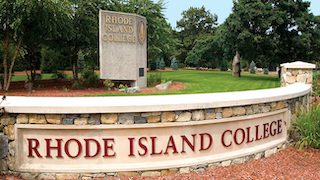
The Early Enrollment Program is housed in the Forman Center, Room 200, on the Rhode Island College Campus.