
High-Demand Psychology Careers
- Clinical Psychologist
- Social Services Case Manager
- Career Advisor/ Guidance Counselor
- Forensic Psychologist
- Marketing Strategist
- Personnel Recruiter

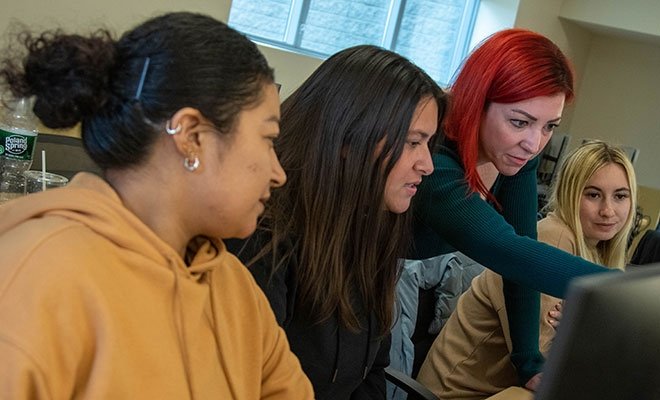
RIC Psychology majors become adept at research methods, data analysis and problem solving; they learn how to think critically and communicate effectively; and they learn how to apply social psychology concepts to everyday life and understand the complexities of human behavior. These skills can be applied to many occupations and disciplines.
On November 7, from 12:30–4 pm, come see all that Rhode Island College has to offer. Discover how we prepare students for success through in-demand academic programs, hands-on learning and state-of-the-art facilities. Tour our beautiful campus and connect with the faculty, staff and students who make RIC a welcoming community.
We're thrilled that you're interested in Rhode Island College and we want to make sure that nothing stands in your way of pursuing a RIC degree. Just let us know how we can help you with your next steps.
Understand the courses you’ll take, the curriculum requirements to meet, and the concepts you’ll gain mastery of. We also offer two related minor program options. Get the detailed information you’re looking for.
Our accelerated BA-to-MA psychology program allows students to complete both degrees in as little as five years.










“I can’t say enough about Rhode Island College, especially the Psychology Department. The supports I received from the professors were just amazing. They all believed in me. It was like they had all wrapped their arms around me. It was community.”

Boisvert is now headed for a new and challenging career where she can use both skills.
Upon completion of this program, students will be able to:
Declaring a minor allows you to explore other areas of interest and make interdisciplinary connections. Minor areas at RIC complement and reinforce all major areas of study. By declaring a minor, you can set yourself apart as a candidate for job, internship and volunteer opportunities.
Psychology Minor Course Requirements
Neuroscience is an inherently interdisciplinary enterprise spanning from molecular to behavioral science. In an increasingly complex and competitive world the undergraduate study of behavioral neuroscience emphasizes the interdependent nature of science and allows students to draw knowledge from diverse fields in order to better understand and address our greatest social, biological and ethical challenges. The behavioral neuroscience minor seeks to prepare students for diverse careers or graduate study in fields related to behavior and brain function. Students graduating with a minor in behavioral neuroscience in combination with degrees in psychology, biology, chemistry, computer science or others may choose to pursue careers in biotechnology, consulting, medicine, pharmaceutical and/or medical industry, public health, research or teaching.
Behavioral Neuroscience Minor Course Requirements
The Department of Psychology focuses on the study of mind and behavior.