
High-Demand Physics Careers
- Physicist
- Science Teacher
- Astronomer
- Nuclear Engineer
- Nanotechnologist
- Research Scientist
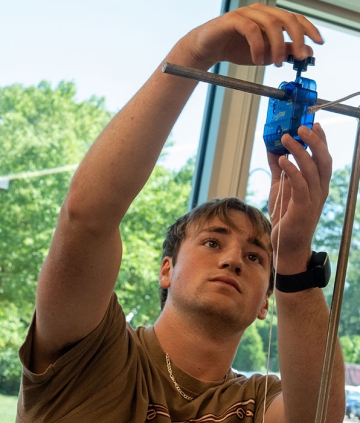
Semiconductor design. Renewable energy. Space exploration. Mechanical engineering. These are just a few of the high-tech growth industries requiring physicists. RIC's Physics Program combines a rigorous scientific foundation with practical applications in lab work and opportunities to collaborate with faculty on research.
One Day Only! Join students from across Rhode Island on November 16 and apply free to Rhode Island College! Take advantage of Apply to RIC for Free Day and we'll waive your $50 application fee.
On November 7, from 12:30–4 pm, come see all that RIC has to offer. Discover how we prepare students for success through in-demand academic programs, hands-on learning and state-of-the-art facilities.
We're thrilled that you're interested in Rhode Island College and we want to make sure that nothing stands in your way of pursuing a RIC degree. Just let us know how we can help you with your next steps.
Understand the courses you’ll take, the curriculum requirements to meet, and the concepts you’ll gain mastery of. This program also offers a minor program option. Get the detailed information you’re looking for.
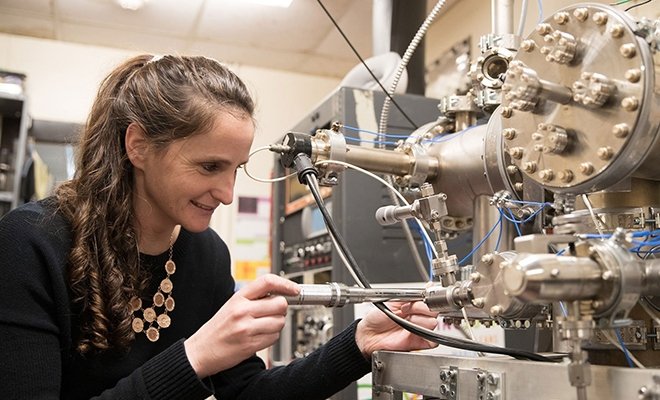
Clarke Science, home of our physics program, just underwent a $60 million renovation. The modern research and teaching workspace now houses 10 teaching labs, 4 research labs, an instrument room, 2 lecture halls, 2 traditional classrooms, and faculty offices.
We are proud to offer one-on-one research with faculty mentors for students interested in pursuing graduate school in physics or engineering.






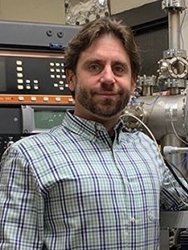
“There are students who aren’t strong performers in the classroom who just come to life in the lab. It’s my job to help students decide if they want to work on problems that don’t yet have solutions and that only happens in the lab.”
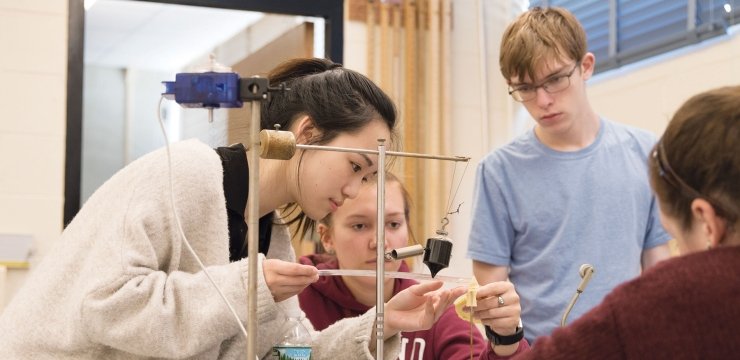
"There are few things more beautiful than the core of a nuclear reactor," says RIC Associate Professor of Physical Sciences Benjamin Young.
Upon completion of this program, students will be able to demonstrate:
Declaring a minor allows you to explore other areas of interest and make interdisciplinary connections. Minor areas at RIC complement and reinforce all major areas of study. By declaring a minor, you can set yourself apart as a candidate for job, internship and volunteer opportunities.
The Department of Physical Sciences covers the four main branches of physical science: physics, chemistry, Earth science and space science.