BSN–DNP: Adult-Gerontology Acute Care CNS & Certified Nurse Educator

Prepare for both Adult-Gerontology Acute Care and Nurse Educator roles.

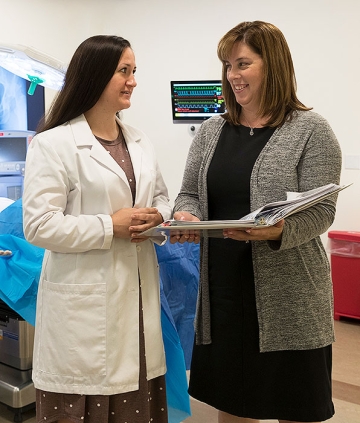
Kara Misto talking with nursing student while holding open binder

Care for adult populations while shaping the next generation of nurses.

Apply to RIC Request Information

This BSN-to-DNP program prepares you for both the Adult-Gerontology Acute Care Clinical Nurse Specialist (AGACCNS) and Certified Nurse Educator (CNE) roles, allowing you to influence clinical outcomes for adult populations and deliver effective educational experiences in academic and clinical environments. Upon completion, you will be eligible to pursue certification in both specialties. Designed for nurses who hold a BSN and have at least one year of acute care experience, our program allows students to complete the majority of coursework online, studying full-time or part-time.

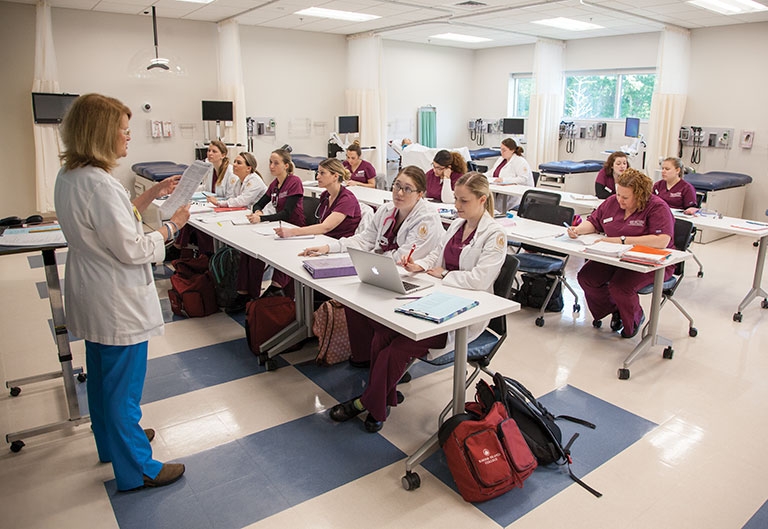
Nursing students being taught in simulation classroom

Unparalleled Preparation

  • Small classes – personalized learning
  • Prepared for two nursing roles
  • Eligible for three certification exams
  • CCNE accredited
  • Accessible and competitive tuition
  • Majority of courses available online
Students working on mannequin in nursing simulation

AGACCNS Impact

  • Improve outcomes for complex adult and older adult patients in acute and critical care settings through advanced clinical expertise and evidence-based care.
  • Strengthen nursing practice by mentoring staff nurses, providing clinical consultation, and leading interdisciplinary problem-solving efforts.
  • Drive system-wide quality improvement initiatives that enhance patient safety, care coordination, and overall healthcare delivery.

More AGACCNS Details

Nursing student taking a person's blood pressure in a simulation room

CNE Impact

  • Advance nursing competence by designing, implementing, and evaluating evidence-based nursing education.
  • Support workforce development through mentorship, clinical instruction, and professional growth across academic and clinical settings.
  • Improve patient care outcomes by strengthening nursing knowledge, clinical judgment, and lifelong learning across healthcare teams.

More CNE Details

campaign

Take Most of Your Courses Online!

Students in this program may take the majority of their courses online via the RIC Hyflex model. This model is designed to provide the highest quality education coupled with the flexibility and accessibility needed by adult learners. Synchronous sessions are offered in both in-person and remote formats, allowing students the flexibility to participate in each class in the way that best meets their needs.

Adult-Gerontology Acute Care CNS Role

A Clinical Nurse Specialist (CNS) is an Advanced Practice Registered Nurse (APRN) prepared through a master’s, doctoral, or post-graduate certificate CNS program. Adult-Gerontology Acute Care Clinical Nurse Specialists diagnose, prescribe, and manage the care of adult and older adult patients in acute and critical care settings. CNSs improve outcomes through direct patient care, leadership in evidence-based practice, optimization of healthcare systems, and advancement of nursing practice.

AGACCNS Certification

Program graduates may sit for both the Adult-Gerontology Clinical Nurse Specialist and Certified Nurse Educator certifications. Adult-Gerontology Clinical Nurse Specialist certification may be obtained through either the American Association of Critical-Care Nurses (ACCNS-AG) or the American Nurses Credentialing Center (AGCNS-BC).

Certified Nurse Educator Role

A Certified Nurse Educator is a nurse faculty member who demonstrates expertise in nursing education through a rigorous national certification process. Nurse educators design, implement, and evaluate nursing education programs across healthcare and higher education settings. Certified Nurse Educators improve outcomes by advancing evidence-based teaching, mentoring future and practicing nurses, strengthening clinical competency, and promoting excellence in nursing education and workforce development.

CNE Certification

Program graduates may sit for both the Adult-Gerontology Clinical Nurse Specialist and Certified Nurse Educator certifications. Certified Nurse Educator certification may be obtained through the National League for Nursing (NLN).
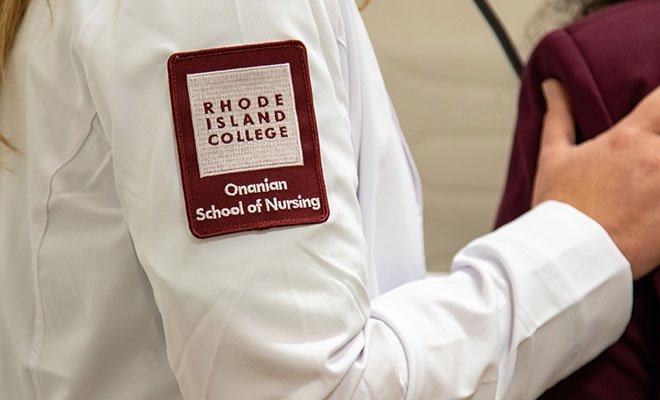
Nursing student in white nursing coat with RIC Onanian School of Nursing badge on sleeve

More Program Specifics

Learn more about admissions requirements, courses, retention, program outcomes, and tuition & fees.

Frequently Asked Questions

Both CNSs and NPs provide advanced clinical care and can diagnose and prescribe, but their focus differs. If you're drawn to working directly with patients over time, an NP path may be the right fit. If you're more interested in improving how care is delivered — influencing nursing practice, leading change, and shaping outcomes at a systems level — the CNS role may be for you.

Most Clinical Nurse Specialist programs require at least a year of acute care nursing experience. This experience is crucial as Clinical Nurse Specialist education builds on practical clinical judgment and problem-solving skills. Prior experience managing complex patients and navigating fast-paced hospital environments is beneficial for success in a Clinical Nurse Specialist program.

Graduates with a nursing education background often transition into academic faculty roles, clinical educator positions in hospitals, or staff development and professional practice roles. Some individuals choose to pursue dual careers, working as a Clinical Nurse Specialist in practice while simultaneously teaching or leading education initiatives. This dual preparation provides graduates with a broader range of career options beyond a single career track.

The program’s “education” component encompasses not only theoretical knowledge of teaching but also practical skills such as course design, learner evaluation, simulation, and teaching in both classroom and clinical settings. Typically, a practicum component is included, where students gain hands-on teaching experience, either with nursing students or practicing staff.

Eligibility for certification as an Adult-Gerontology Acute Care Clinical Nurse Specialist is available. While the nursing education component does not mandate a single mandatory certification, graduates with a nursing education background are prepared to pursue credentials such as Certified Nurse Educator (CNE), which aligns with their career goals.

The RIC Advantage

The baccalaureate degree program in nursing, master’s degree program in nursing, and Doctor of Nursing Practice program at Rhode Island College are accredited by the Commission on Collegiate Nursing Education.

#15
in New England for Nursing among public universities - 2024 U.S. World News & Report
laptop_mac

Apply for Graduate Admission

To begin the process you will need to sign up for an account with CollegeNET. Once you have a CollegeNET account, you will be able to log in any time and see your Activity Log which shows you a personalized status page.

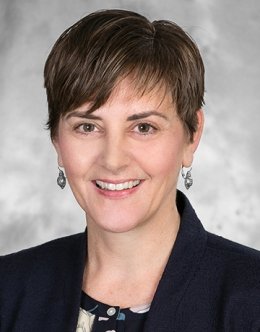
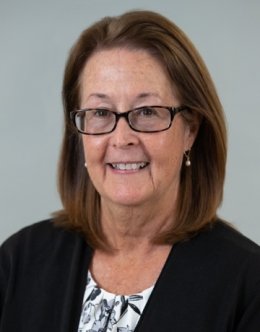
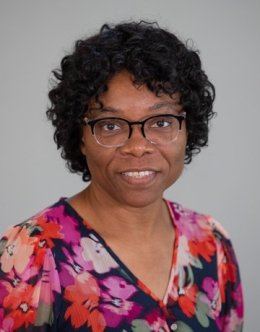
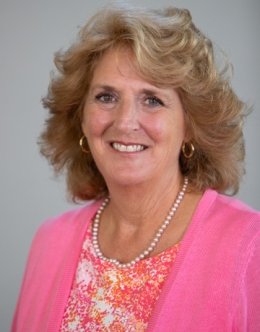
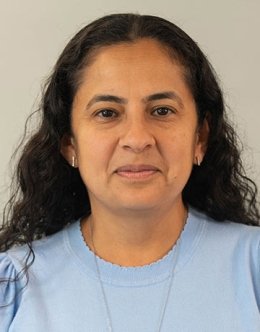
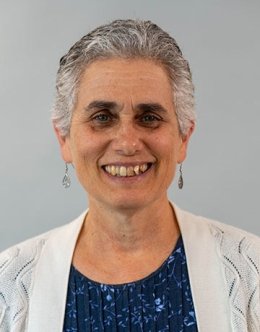
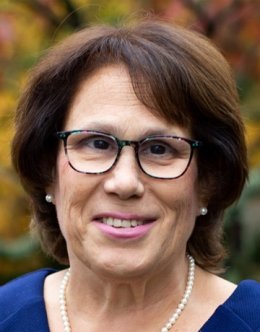
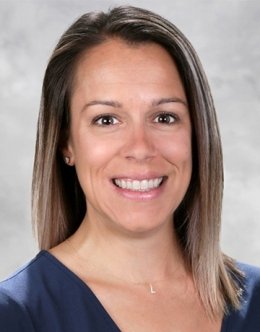
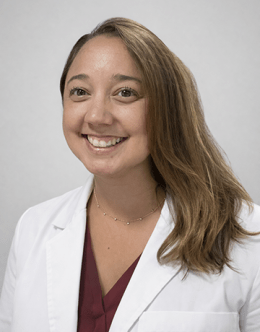
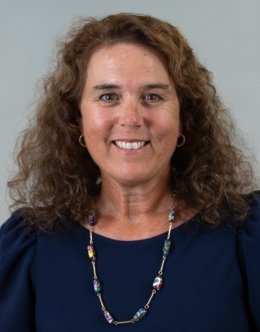
Our Nursing Faculty

Program Details

Admission Requirements

  • completed application form accompanied by a $50 nonrefundable application fee
  • baccalaureate degree in nursing from an NLNAC or CCNE accredited program.
  • minimum of one year RN experience in an adult acute care setting within the last 3 years is recommended. 
  • applicants with international degrees must have their transcripts evaluated for degree and grade equivalency to that of a regionally accredited institution in the United States
  • official transcripts of all undergraduate and graduate records
  • minimum GPA of 3.0 on a 4.0 scale in undergraduate coursework
  • preferred undergraduate minimum GPA of 3.0 in science courses
  • official report on the Test of English as a Foreign Language (TOEFL) from international applicants for whom English is not their first language
  • professional resume or curriculum vitae
  • 3 professional references - one must be from a clinical supervisor
  • statement of intent that demonstrates the candidate’s leadership and practice experience and reasons for pursuing doctoral study (Please Note: The statement should be representative of the applicant’s writing ability. The statement should be two-to-four typed pages, double-spaced and written in 12-point font.)
  • proof of residency required for in-state tuition
  • interview may be required

Retention Requirements

  • All students are expected to maintain a cumulative GPA of 3.00 (grade of B) or greater in their graduate program.
  • Students who earn less than a B, including a grade of U, in a required nursing course will have their status reviewed by the DNP program director.
  • Students who do not achieve a minimum grade of B in Advanced Health Assessment, Advanced Pathophysiology or Advanced Pharmacology must repeat the course and may not progress in clinical courses.
  • Students on probationary status must achieve a minimum grade of B in all required nursing courses over the next 9 credits.
  • Two grades below a B are sufficient cause for consideration of dismissal. The decision regarding a student's status will be made by the DNP program director in consultation with the dean.
  • Students may be required to repeat a course at the discretion of the DNP program director.

DNP Program Outcomes

Students of the DNP Program will demonstrate mastery of all of the Essentials of Doctoral Education for Advanced Nursing Practice (AACN, 2006) and the AACN (2021) Competencies and level-2 Sub-competencies within the Ten Domains for Nursing, leading to achievement of the following DNP End-of-Program Outcomes: 

  • demonstrate the integration, translation, synthesis, and application of established and evolving knowledge from basic science, nursing knowledge and other ways of knowing, and other disciplines that results in clinical judgment founded on a broad knowledge base [Domain 1] [DNP Essentials I, III, VIII]
  • evaluate person-centered care at the advanced nursing level across the organization/system, provider, patient, and/or population level that focuses on the individual within multiple complicated contexts, including family and/or important others [Domain 2] [DNP Essential II, V, VI, VII, VIII]
  • design population health systems that span the healthcare delivery continuum from public health prevention to disease management of populations [Domains 3, 6, 9] [DNP Essentials VI, VII, VIII]
  • generate, synthesize, translate, criticize, apply, and disseminate nursing knowledge that improves health and transforms health care [Domains 1, 4, 5, 7, 10] [DNP Essentials I, II, III, IV, V, VIII]
  • optimize health and healthcare outcomes using principles of health, quality, safety, and implementation science, through both system effectiveness and individual performance [Domain 5, 7] [DNP Essentials I, II, IV, VII, VIII]
  • lead collaborative initiatives across professions and with care team members, patients, families, communities, and other stakeholders to optimize care, enhance the healthcare experience, and strengthen outcomes [Domains 2, 6,7] [DNP Essentials V, VI, VII, VIII]
  • design evidence-based methodologies, system-thinking, business, and financial acumen to provide safe, quality, evidence-based and equitable care to diverse populations [Domains 3, 4, 5, 7, 9, 10] [DNP Essentials , II, III, IV, V, VI, VII, VIII]
  • analyze information and communication technologies and informatics processes to gather data, support care delivery, and inform decision making [Domains 4, 5, 7, 8, 9, 10] [DNP Essentials , II, III, IV, V, VII, VIII]
  • cultivate an advanced-level professional nursing identity that encompasses self-reflective practice, commitment to inclusivity and social justice, accountability, collaborative disposition and ethical comportment that reflects nursing’s values [Domains 6, 9, 10] [DNP Essentials I, II, V, VI, VIII]
  • foster organizational commitment to promote personal health, resilience, well-being; contribution to lifelong learning; expansion of nursing expertise, and the assertation of leadership [Domains 9, 10] [DNP Essential VIII] 
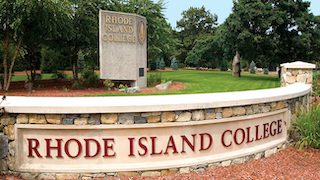
Rhode Island College entrance

Rhode Island Nursing Education Center

Rhode Island Nursing Education Center (RINEC) is a Providence-based facility for baccalaureate, master’s and doctoral level nursing instruction for RIC's Zvart Onanian School of Nursing and URI's College of Nursing.